Not one origin story, but thousands of years of cloth, place, ingenuity and personal expression.
শাড়ি
A cloth still becoming
Six thousand years of living textile knowledge.
This chronology marks documented textile and saree-history milestones—not exact “invention dates.” Most traditions evolved across generations, and their beginnings cannot responsibly be reduced to a single year.
A wider map of the saree
Traditions, across time and place.
A selected chronology of South Asian saree traditions. Periods mark documented roots, emergence or flourishing—not exact invention dates. Weaving times are indicative and change with yarn, motif density and artisan team.
Known layoutsJaal · Butidar · Tercha · Panna Hazar
Typical loom time1–6 months
Banarasi
Varanasi · drawloom brocade and zari
Known formsKatan · Organza · Georgette · Shattir
Typical loom time15 days–6 months
Baluchari
Bengal · narrative figured silk pallus
Known formsBaluchari · Swarnachari
Typical loom time1–3 weeks
Maheshwari
Madhya Pradesh · light silk-cotton with striped borders
Known formsChandrakala · Chandratara · Baingani Chandrakala
Typical loom time5–10 days
Odisha Ikats
Odisha · resist-dyed yarn alignment
Known formsSambalpuri · Bomkai · Bandha
Typical loom time2–8 weeks
Tangail & Phulia
Bangladesh and Bengal · fine cotton with extra-weft borders
Known formsButidar · Jangla · Jamdani
Typical loom time7–20 days
Deccan South
Distinctive joins, checks and borders
Known formsIlkal · Narayanpet · Patteda Anchu
Typical loom time3–12 days
Paithani
Maharashtra · tapestry silk
2 months–1 year
Patan Patola
Gujarat · double ikat
6 months–1 year
Chanderi
Madhya Pradesh · translucent silk-cotton
3–10 days
Kota Doria
Rajasthan · checked khat weave
3–5 days
Pochampally Ikat
Telangana · yarn tie-resist
7–15 days
The main vertical rail highlights Kiranlata’s regional edit. The wider constellation adds important traditions beyond the current catalogue. All production ranges describe skilled handloom work; highly intricate or custom pieces may take substantially longer.
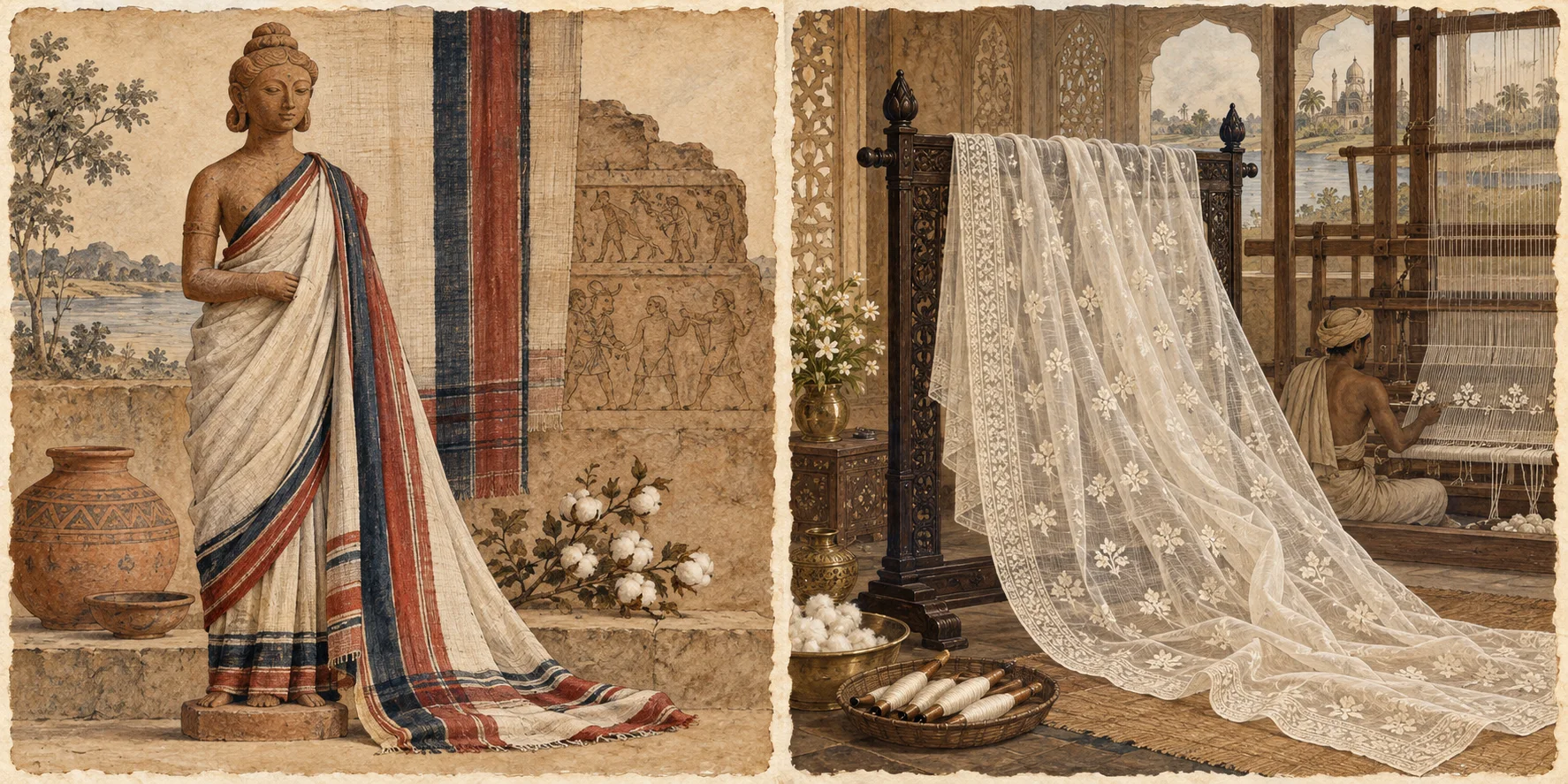
Cloth before the modern sari
India’s handmade textile history reaches back at least six millennia. Ancient cotton knowledge preceded the garment we now call the saree, which emerged gradually from traditions of wrapped, unstitched cloth.
Try this: notice how one length becomes architecture on the body.
Courts, workshops and fine muslin
Under Mughal patronage, regional workshops and established crafts reached wider markets. Bengal’s extraordinarily fine cottons and figured muslins became celebrated far beyond the subcontinent.
Look closer: Jamdani motifs are woven—not embroidered.
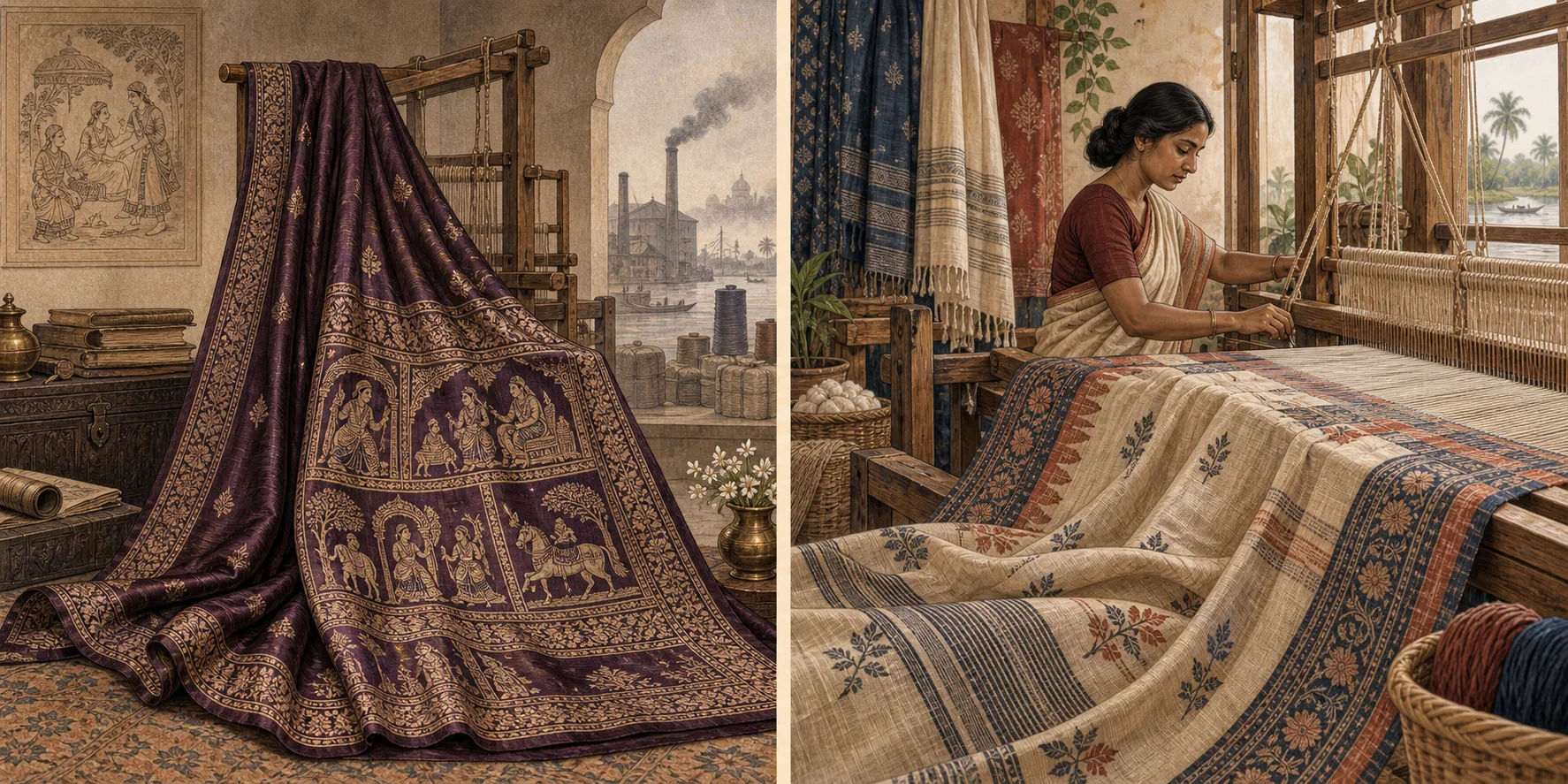
Narratives enter the pallu
Baluchari developed as a celebrated Bengal silk tradition, its pallus arranged like woven picture galleries. Museum records preserve regional silk, brocade and cotton sarees from this era.
Decode it: a pallu can be read like a graphic novel.
Industry, resistance and survival
Mechanised production transformed textile markets, yet handmade cloth endured. During the freedom movement, khadi and hand-spinning became expressions of self-reliance and political identity.
Ask of every saree: handloom or powerloom—and how do we know?
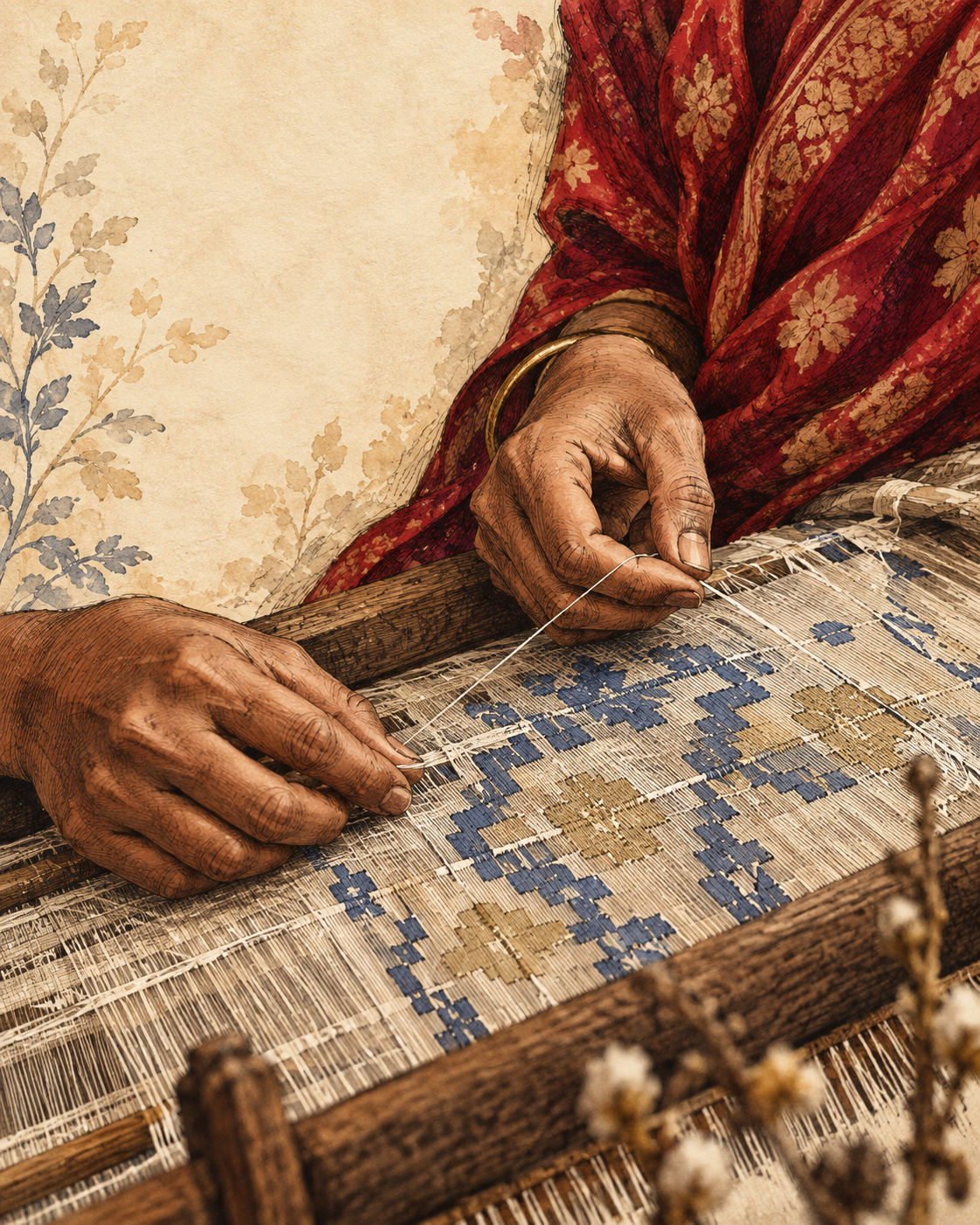
Jamdani recognised by UNESCO
UNESCO inscribed Bangladesh’s traditional art of Jamdani weaving. Motifs are formed directly on the loom through a labour-intensive discontinuous-weft technique transmitted within weaving communities.
Human signature: tiny variations reveal the rhythm of the hand.
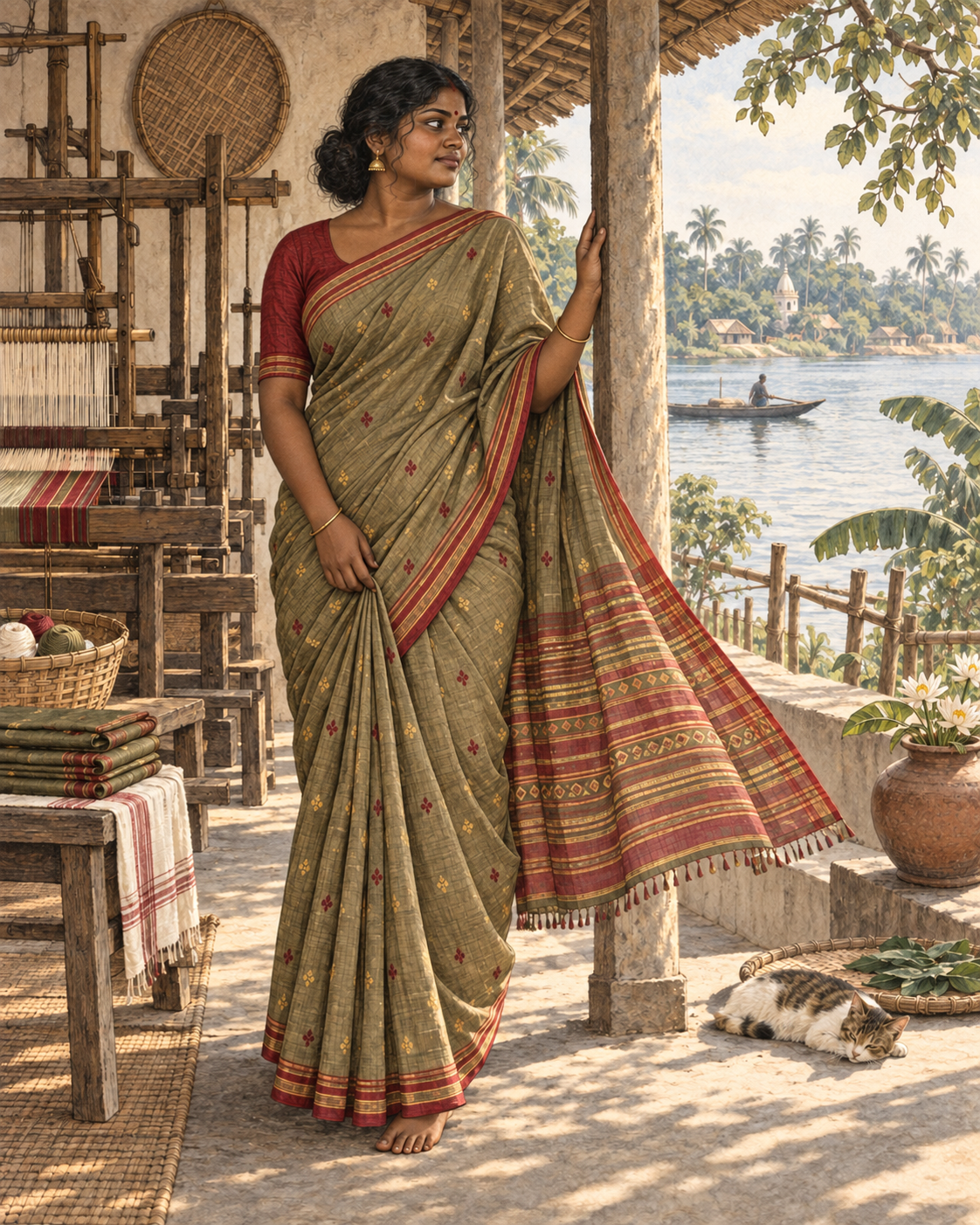
Tangail joins the living-heritage list
Traditional saree weaving art of Tangail, Bangladesh, joined UNESCO’s Representative List—recognition of a tradition kept alive through practice and transmission.
Your chapter: wear, repeat, ask, remember, pass on.
Chronology informed by institutional sources from the Victoria and Albert Museum, The Metropolitan Museum of Art, UNESCO Intangible Cultural Heritage, and IGNCA. Dates describe documented evidence or recognition, not definitive invention dates.